01 / Patrol
Mobile patrol
Marked patrol cars checking your Gilroy property at unpredictable times all night.
View details
Guide
Both protect a property. They cost very different amounts and solve different problems. Here’s how to sort out which one you need.
Request a quoteCall (408) 539-1820
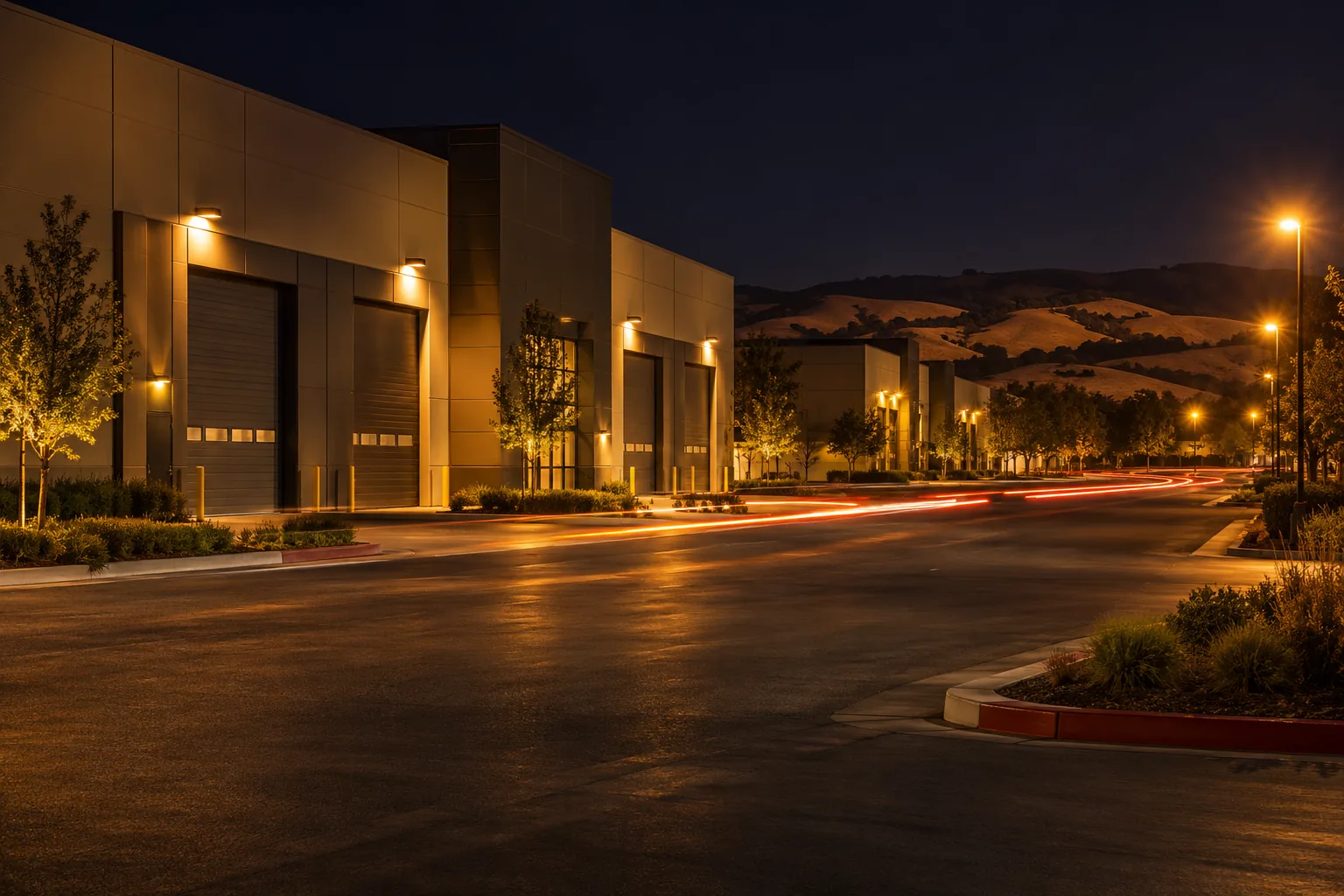
A posted guard arrives at the start of the shift and stays until it ends. Mobile patrol sends a marked car to the property several times a night, at times that change from night to night. The first gives you a person on site every minute. The second gives you regular, unpredictable checks at a much lower cost.
Neither is the right answer everywhere. What you’re protecting, when it’s at risk and how much ground there is decide which one makes sense, and using both is often the best answer.
If people are arriving and leaving, someone has to be there to meet them. A distribution building with drivers checking in at the gate, a hotel with guests coming through the lobby at midnight, an office where tenants work late, a store closing out at nine: each needs a person on site, not a visit every couple of hours.
A posted officer is also the stronger choice when the risk is steady. If a yard keeps getting hit, if cash is handled after dark (a job for armed officers) or if something serious happened recently, constant presence is the clearest message you can send.
Some properties go quiet at closing and stay that way until morning. Warehouses after the last trailer leaves, retail strips after the stores lock up, offices along the Highway 101 corridor on weekends. There’s no one to sign in and nothing happening at the door, so paying for an officer to sit there all night is hard to justify.
Patrol handles those sites by turning up when nobody expects it. Officers check the doors, gates, yard and lot on each visit and log the time of every stop. The size of the property and its history set the number of visits, and because the timing is randomized, anyone watching can’t plan around it.
A combined plan is often the most efficient. An officer covers the busy hours, then patrol takes over overnight. Or a posted officer stays at the main gate while patrol checks the back lot and a second property across town.
Live camera monitoring adds a third layer. Cameras are watched all night, and a patrol officer goes when something shows up on screen. For a wide yard, that hybrid setup often covers more ground than a single overnight post.
Three questions settle most cases. Is anyone on the property after hours? Has anything happened in the last year? How much ground has to be covered? Bring those answers to a free walkthrough and we’ll put both options side by side in a written quote. Terms are month to month, so you can start with one and switch if it isn’t the right fit.
Picture a business with a small office near downtown and a storage yard on the south end of town. The office is busy from eight to five, with clients and deliveries, and empty overnight. The yard holds equipment and is empty most of the time. A sensible plan puts patrol on both overnight, with stops at changing times, and adds a posted officer at the yard only during the weeks when equipment is staged there for big jobs.
The exact mix matters less than the principle: each property gets the kind of coverage its hours call for.
Whoever you talk to, ask how visit times are set, what each patrol stop covers, how rounds are logged and how reports reach you. Ask how quickly hours can change. Clear answers to those questions tell you a lot about how the coverage will run in practice.
A few useful answers
Patrol usually does, because you pay for visits instead of a full shift.
Yes. A posted officer can be added as soon as the reports show the need.
A small site can start with two or three, a large yard with more, and the walkthrough sets the opening pattern.
Resources
Industries
Services
01 / Patrol
Marked patrol cars checking your Gilroy property at unpredictable times all night.
View details02 / On-site
A uniformed officer on post at your Gilroy property, keeping the door, the lot and the visitor log in hand.
View details