01 / Patrol
Mobile patrol
Marked patrol cars checking your Gilroy property at unpredictable times all night.
View details
Apartments and HOAs
Security for Gilroy apartment communities and HOAs: overnight patrols at changing times through the parking, pools and common areas, with reports that keep managers and boards up to speed.
Request a quoteCall (408) 539-1820
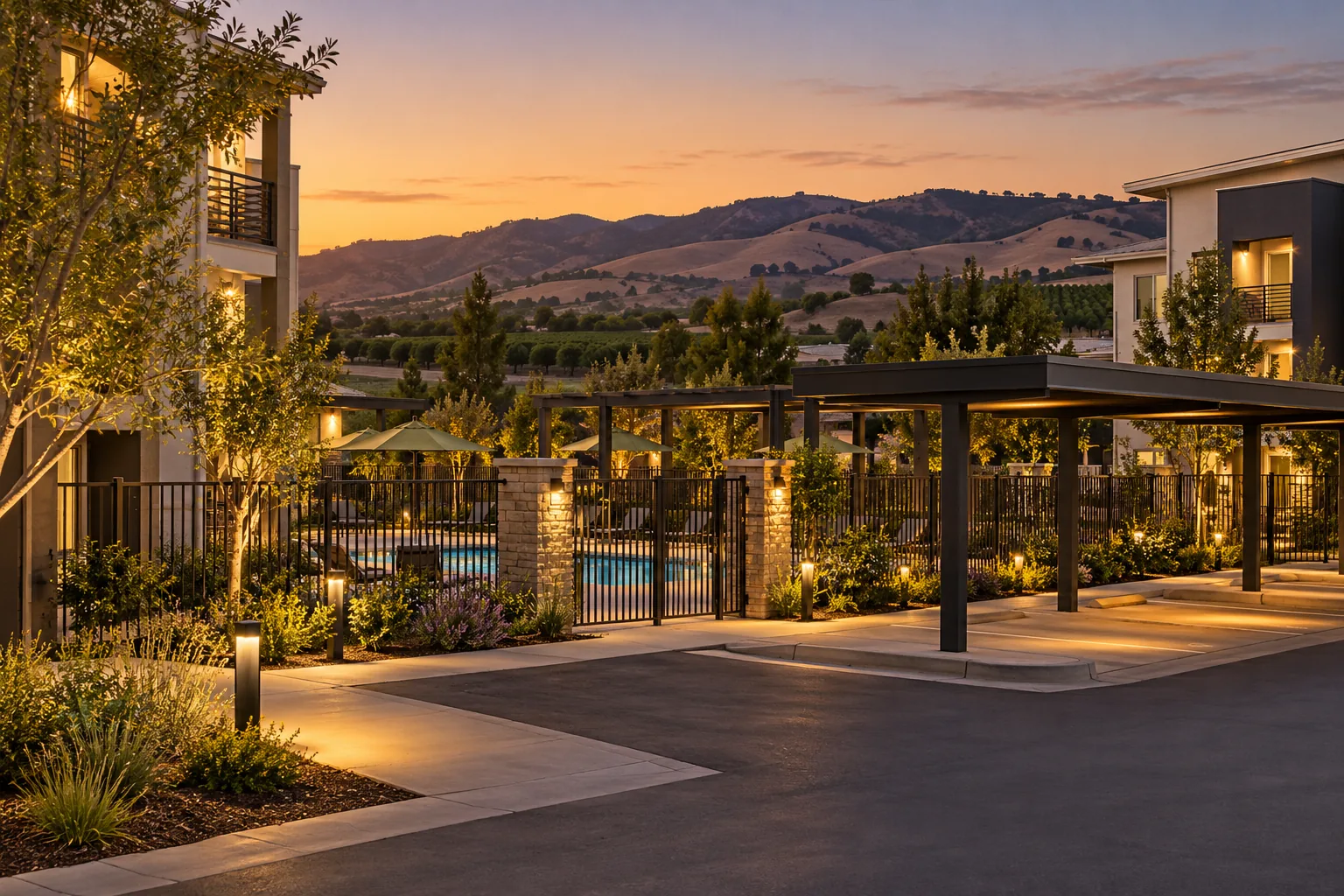
A resident coming home from a late shift should feel at ease parking and walking to the door. The manager, meanwhile, wants to know what went on after the leasing office locked up. Communities across Gilroy have shared pools, clubhouses, gates and long rows of parking that sit quiet late at night.
Patrol officers look over the parking, carports, pools, clubhouses and gates, arriving at different times each night. Bigger communities can station an officer at the front gate or the lobby for evenings and weekends. Timed logs and photo incident reports reach managers and HOA boards by email, so the next board meeting starts with facts instead of rumors.
When cameras already cover the gates and lots, live camera monitoring can fill the gaps between patrol stops.
Services
01 / Patrol
Marked patrol cars checking your Gilroy property at unpredictable times all night.
View details02 / On-site
A uniformed officer on post at your Gilroy property, keeping the door, the lot and the visitor log in hand.
View details03 / Video
Your current cameras watched live during the hours your Gilroy property sits empty.
View detailsA patrol officer pulls in at a different time each night. They drive the parking rows and carports, check the pool gate and the clubhouse doors, walk past the mailboxes and trash enclosures and look for lights that are out. Each stop goes into the log with its time, and anything wrong gets photographed.
Managers get a morning report that shows when patrol visited and what turned up. HOA boards can receive the same reports, or a summary ahead of each meeting. Over a few months, the reports show where problems cluster, which helps decide where a light, a lock or a camera would make the biggest difference. Our guide to reading security reports explains how boards can put them to use.
A community can also add a person on the property for part of the night, at the main gate or the leasing office during evening hours. A posted officer can cover those hours, with patrol taking over for the rest of the night.
In a mid-rise building, the lobby is where residents, guests and delivery drivers all meet. An officer at the desk greets residents, holds visitors until a tenant confirms them and keeps package drivers from propping the door. Garages get a walk on every round, level by level, with a note of anyone tailgating through the gate or parking in reserved spaces.
Move-in days bring open doors, rental trucks in the fire lane and strangers carrying furniture through the halls. An officer can hold the loading door, keep the lane clear and make sure the building is closed up once the truck pulls away. After hours, patrol takes over the pool deck, the garage and the gates.
Summer brings late nights at the pool and more people outside after dark. The holidays bring packages on doorsteps and visitors parking in unfamiliar spots. Coverage can follow those shifts, with extra stops at the pool in summer and closer attention to mail areas and parking in December, all within the same plan.
Gated communities depend on gates that close. Officers check that vehicle and pedestrian gates latch, note any that are stuck open and look over guest parking for cars that do not belong. Covered garages and carports get a walk-through on every stop, since they are usually the darkest part of a property.
Apartment and HOA posts in Gilroy typically run $40 to $46 an hour on 2026 market figures, and patrol-only plans cost less. The schedule is steady, the duties are clear and the route barely changes from week to week, which keeps the rate down. Your officer’s job is mostly watching and writing it down: gates left open, cars that don’t belong, lights out in the carports.
Patrol is the usual starting point, but some boards want a person on site on weekend nights. Take a 200-unit community with an officer from 8 p.m. to 4 a.m. on Friday and Saturday nights, 16 hours a week at $42: that’s $672 a week, about $2,910 a month. On the other nights, randomized patrol stops check the parking, pools, clubhouse and gates, and the manager and board see every stop in the morning reports. Rates move up for package logs, guest parking checks or a gated property with a staffed entrance. Pools and clubhouses in summer often justify a few extra evening hours.
A few useful answers
Yes. Marked cars stop by at different times through the night.
Yes. We send them to the manager, the board or both, whichever you prefer.
Yes. Amenities can be part of every stop.
Yes. Book officers for the days leases turn over, and they keep loading doors, elevators and fire lanes in order while new residents move in.
Yes. Mail rooms, mailbox clusters and trash enclosures can be part of every stop.
Residents tell the manager, the manager passes it to us by phone or email, and the next patrol stop checks the spot and notes what it found in the log.
Industries