01 / Unarmed
Unarmed security guards
Approachable officers for Gilroy offices, shops, apartments, hotels and campuses.
View details
Guide
Big lots, steady crowds and long holiday seasons. Here’s how retail centers set up security that works for every tenant.
Request a quoteCall (408) 539-1820
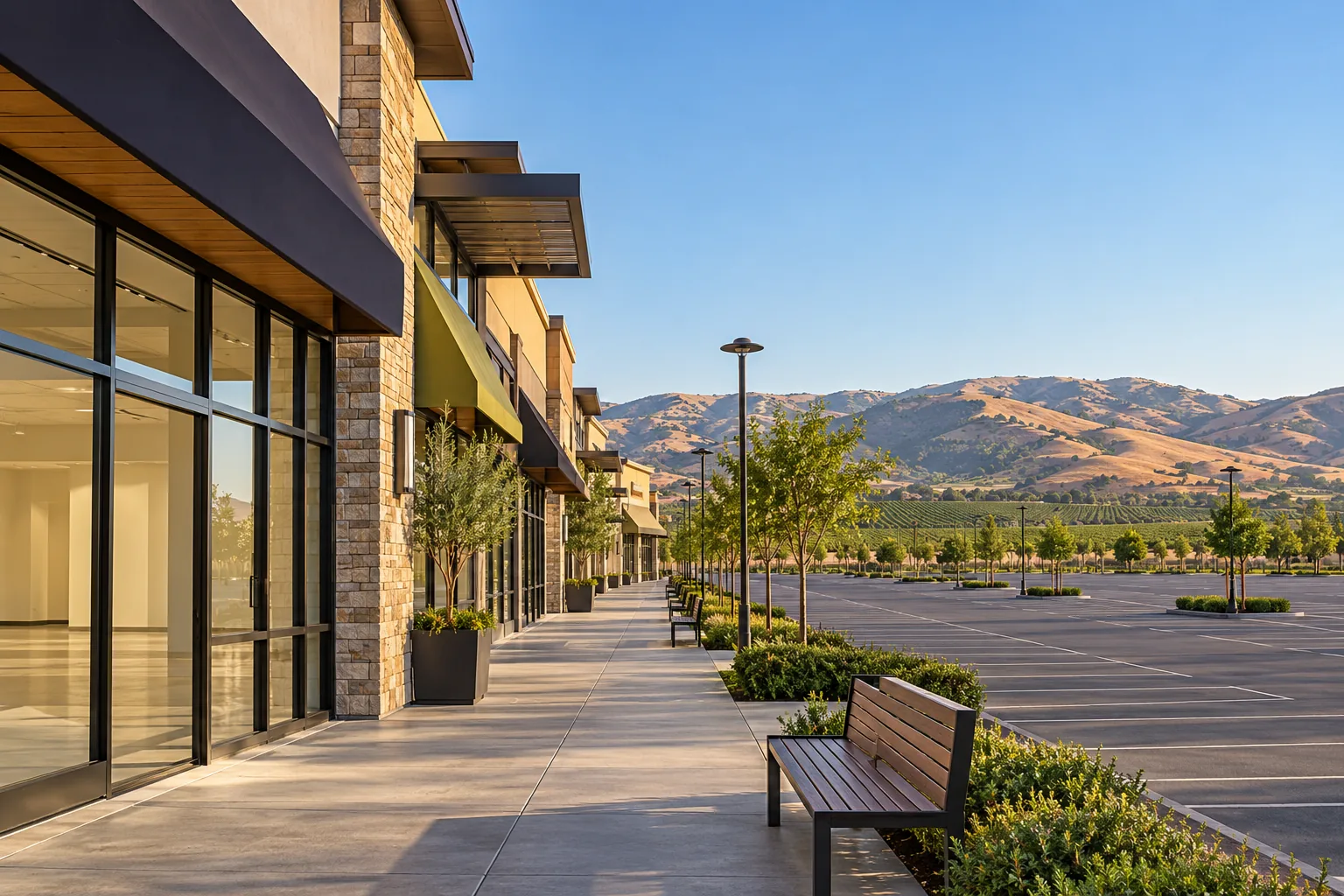
A single store mostly worries about its own door. A center has to think about everything in between: the walkways, benches and seating areas, the parking lots, the service lanes behind the buildings and the loading docks where deliveries arrive. Those shared spaces belong to every tenant, which is exactly why they need someone paying attention to them.
At a large outlet or retail center near the highway, shoppers arrive all day, and the parking areas are large enough that a problem at one end goes unseen from the other. For coverage at one store or a whole center, see retail and outlet security in Gilroy.
A good center plan starts with a visible officer moving through the walkways and storefront rows. They give shoppers someone to ask for help, notice loitering early and give store staff a number to call when a situation walks in the door.
Unarmed officers fit this work well. The goal is a friendly, professional presence that shoppers find reassuring and that anyone looking for trouble finds inconvenient.
Parking is where shoppers and employees feel most exposed, especially on winter evenings when it’s dark well before the stores close. Regular passes through the lot, a check of the lighting and an officer nearby when staff walk to their cars make a real difference.
Once the stores lock up, randomized patrol visits can check the backs of the buildings, the loading areas and the service lanes through the night.
The strongest center plans involve the tenants. Share the officer’s schedule and a contact number, encourage store managers to report problems, and send them a summary when something affects their storefront. Reports go to the center manager by email, so when the same issue keeps coming back, there’s a record to point to.
Holiday weekends and big sale events bring more shoppers, more cars and more chances for trouble. A center can add officers for those stretches and scale back afterward, a simple change each year since terms run month to month.
Downtown merchants can take the same approach on a smaller scale, with an officer around closing time during the busiest weeks.
Some larger tenants run their own loss-prevention staff inside the store. Center security covers the shared spaces between stores, and the two work best when they talk: a quick call when someone suspicious leaves a store, a shared description, a heads-up before closing.
In big lots near the highway, car break-ins are a common worry. Visible officers moving through the rows, attention to lighting and a quick look at anyone trying door handles go a long way. Reports noting where and when problems happen help the center manager decide where to add lighting or cameras.
A center does not have to begin with a full-time post. Weekend officers, closing-time coverage and overnight patrol visits are all sensible ways to begin, and the reports quickly show where more hours would help.
After a few months of coverage, look at the reports with your tenants. Which rows of the lot see the most trouble? Are closing-time problems fewer? Which entrances still need attention? Those answers tell you where to shift hours next season, and whether a camera or better lighting would do more than another officer.
A few useful answers
Yes. A tenant can add a store post alongside the center’s common-area coverage.
Yes. Shift and incident reports go to whoever you name, by email.
Yes. Officers in the lot answer questions and walk people to their cars when asked.
Yes. Randomized patrol stops check the backs of buildings, the loading areas and the lot overnight.
The idea is the same on a smaller scale: an officer around closing time and patrol checks overnight.
Services
01 / Unarmed
Approachable officers for Gilroy offices, shops, apartments, hotels and campuses.
View details02 / On-site
A uniformed officer on post at your Gilroy property, keeping the door, the lot and the visitor log in hand.
View details