
Industries
Hospital and healthcare security in Gilroy
Hospital security in Gilroy and South County: steady officers for emergency entrances, lobbies and waiting rooms, visitor checks, parking lots and structures, and the long night shift on hospital campuses.
Request a quoteCall (408) 539-1820
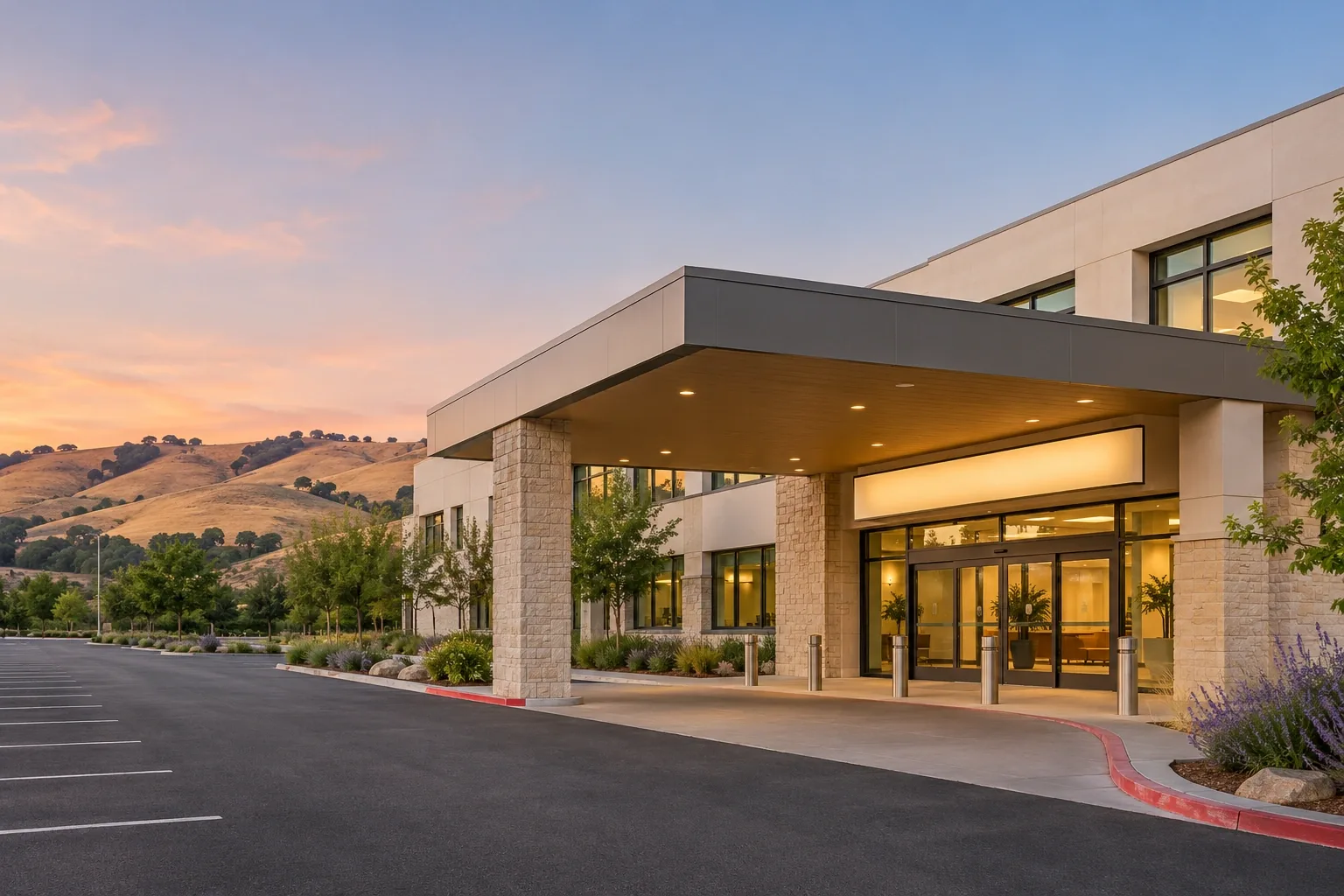
Healthcare in South County
Healthcare buildings in Gilroy and across South County range from hospital campuses and urgent care centers to dialysis units, imaging centers and the medical office buildings near the highway. These buildings never really close. People arrive worried, in pain or in a hurry, at every hour, and staff need to focus on them rather than on the door.
Security at a hospital is about keeping that environment calm. A good hospital security guard is easy to find, quick to help and steady when tempers rise, so nurses, doctors and front-desk staff can do their own work.
The emergency entrance
The emergency department is the busiest door in any healthcare building and the one most likely to see a tense moment. An officer posted at the entrance greets arrivals, points walk-in patients to triage, keeps the ambulance bay and drop-off lane clear, and watches the waiting room so staff aren’t left alone with an upset visitor.
When someone becomes loud or threatening, the officer steps in early with a calm voice and gives staff room to step back. If a situation needs police, the officer makes the call your post orders describe and stays with staff until help arrives.
Lobbies, waiting rooms and visitor checks
Main lobbies are where visitors learn where to go. The officer checks visitors in, confirms who they are seeing when your policy asks for it, issues visitor badges and gives clear directions to wards, labs and imaging. After visiting hours the officer narrows entry to the doors your facility keeps open and checks each late arrival.
Quiet attention matters here. Officers notice a person who keeps returning without a reason, a visitor trying staff-only doors, or a waiting room that is getting crowded, and they let the charge nurse or manager know right away.
Parking structures and lots
Staff and visitors walk to their cars at all hours, often across large lots or through a parking structure. A roving officer covers stairwells, elevators, ramps and outer rows on a set schedule, checks lighting and gates, and keeps an eye out for car break-ins. Patrol cars can add visits to outlying lots through our mobile patrol service.
At shift change, especially late at night, officers can walk nurses and staff to their cars. It’s one of the simplest ways to make a night shift feel safer. Visitors leaving late after a long day at a bedside get the same offer.
Nights and weekends
Overnight, a hospital runs with fewer people and more locked doors. Officers make rounds of the exterior, loading docks and side entrances, check that doors are secured the way your plan describes, and stay near the emergency entrance through the hours when trouble is most likely. Each round is logged with the time, and the shift report goes to your facility manager by morning.
Weekends and holidays bring their own rhythm: fewer staff at the main desk, more visitors in the afternoon and busier emergency nights. Posts can be scheduled heavier on those days and lighter midweek, so coverage follows the real traffic.
Clinics and medical office buildings
Smaller healthcare buildings need a lighter touch. Urgent care centers often want an officer for the evening hours only, and clinics may want opening and closing coverage plus patrol at night. For practices and dental offices, our medical office security page describes a lobby post built around patients’ comfort, and recovery programs can see our rehab facility security page.
Officers and pricing
Healthcare posts lead with unarmed officers chosen for patience and a calm manner. Where a facility’s own risk review calls for it, armed coverage is available on request, with officers who carry exposed-firearm permits. Every officer holds a BSIS guard card and passes a background check, supervisors inspect posts in person, and the facility receives our certificate of insurance before the first shift.
A posted officer in Gilroy runs about $36 to $50 an hour, depending on the post, the hours and the number of entrances. Agreements are month to month. Start with a free walkthrough of the campus, and a written quote follows, built around your entrances and shifts.
A few useful answers
Common questions
What does a hospital security guard do on a typical shift?
They watch the emergency entrance and waiting room, check visitors in, patrol the lots and garage, secure doors after hours and log every round in the shift report.
Can officers help staff with an aggressive visitor?
Yes. Officers step in early, use a calm voice to settle the situation and keep staff safe, calling police when your post orders say to.
Can you cover only the overnight hours at our urgent care?
Yes. Posts can run for any block of hours, such as evenings and overnight, with patrol visits covering the rest of the week.
Will officers walk our night-shift staff to their cars?
Yes. Staff escorts at shift change are a standard part of healthcare posts, especially late at night.